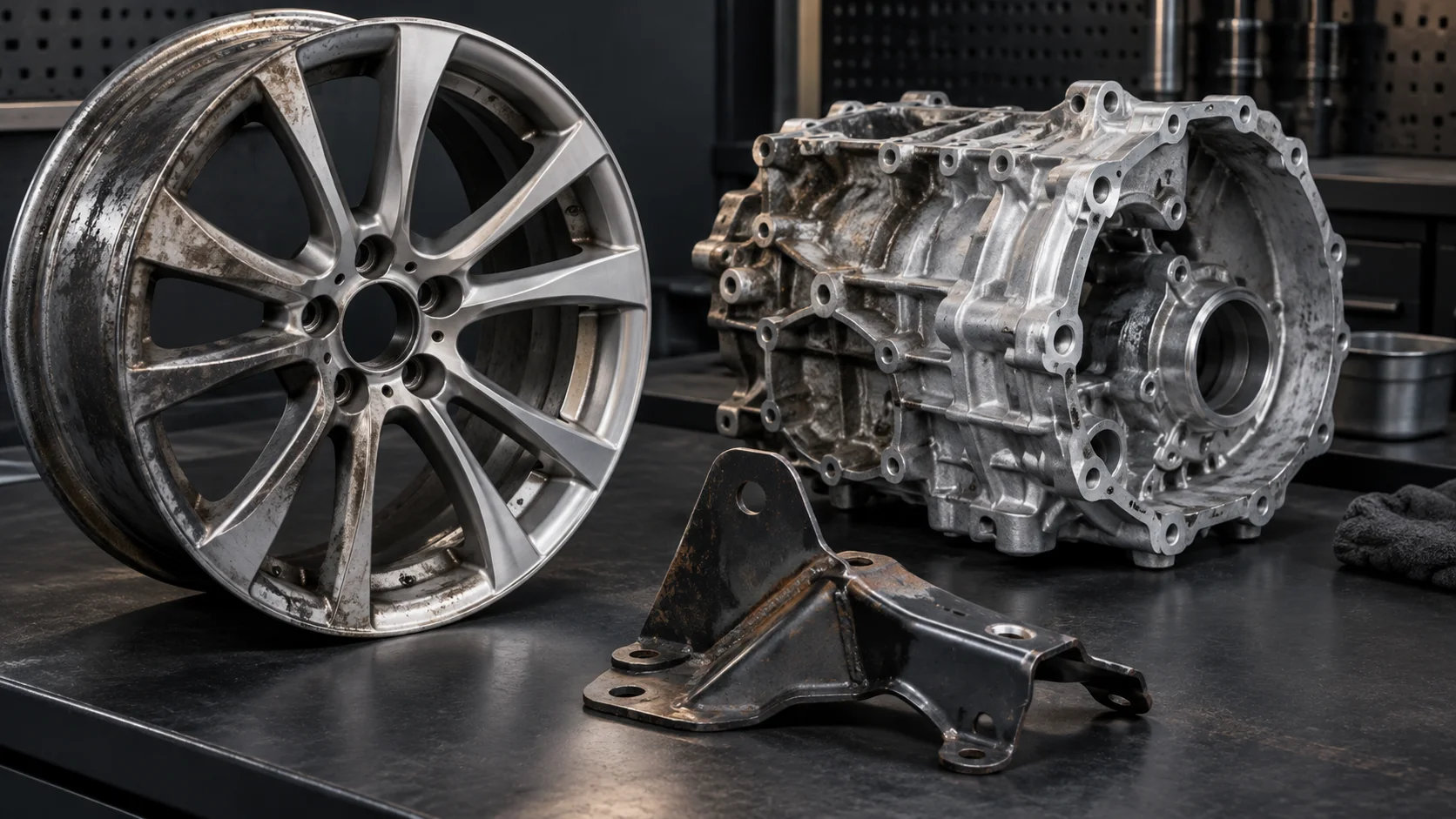
Automotive component cleaningAI-generated concept / AI 示意图
Wheels & rims
Identify alloy or steel construction, existing finishes and the areas to clean. Define whether coatings should be removed or retained.

A clearer surface. A better-informed next step.
Explore laser cleaning for automotive refurbishment and component maintenance. Share your part, the layer to remove and the finish you need before selecting equipment.
Original CleanEraser demonstration to be added.
Use these scenarios to prepare an application brief. Each material, coating and component needs its own suitability review.
Identify alloy or steel construction, existing finishes and the areas to clean. Define whether coatings should be removed or retained.
Describe the metal, deposits, access and critical surfaces. Provide part documentation and photographs for review.
Describe corrosion, coatings and the intended next step. Mark dimensional requirements and areas that must remain protected.
Specify paint or oxide removal targets and the surface condition required by the next coating or assembly process.
Cleaning does not establish roadworthiness or repair damaged parts. Component inspection and any return-to-service decision remain separate.
Rust, paint, deposits and surface preparation involve different objectives. Identify both the layer to remove and the features or finishes to preserve.
Image placeholders, not verified customer results. Original test photographs will be added with configuration and process observations.
Part material · Coating or deposit · Machine configuration · Treated area · Processing time · Number of passes · Surface inspection · Acceptance decision
Discuss geometry, coatings and acceptable surface changes. Ask for an evaluation of the proposed configuration on a sample that represents your work.
Explore pulse laser cleaning machines ↗Share available space, part positioning, transport needs and production workload. Confirm utilities, cooling, extraction and training for the selected model.
Discuss equipment support ↗Model, output, cleaning rate and integration requirements remain subject to the application review. No universal configuration is specified for untested parts.
| Factor | Review in a laser test | Record for your current method |
|---|---|---|
| Surface result | Remaining contamination and required finish | Inspection results and additional preparation |
| Part protection | Critical features and any surface changes | Masking, disassembly and rework |
| Workload | Processing, positioning and inspection time | Complete cycle time per accepted part |
| Workshop fit | Access, extraction and operating controls | Utilities, space and handling arrangements |
| Total cost | Equipment, maintenance, training and process needs | Labor, consumables, waste handling and rework |
Send your requirements first. Agree on sample suitability, handling and shipping arrangements before dispatch.
Arrange a free sample testShare photographs, material, deposits and the required finish.
Define protected features, evaluation criteria and sample arrangements.
Discuss recorded results and suitable equipment options before deciding.
Request an assessment of the wheel material, coating and finish requirements. Confirm the result on a representative sample; a clean appearance alone does not establish that a wheel is suitable for service.
Specify whether paint, clear coat, plating or an anodized finish must stay. Selective removal needs a test and inspection against agreed criteria; do not assume the original finish will remain unchanged.
Yes, these can be discussed as removal targets. Identify the part, material and deposits, and provide photographs. Suitability and any preparation requirements must be reviewed for the specific component.
Start with the required finish, part geometry, workload and workshop conditions. Discuss pulse cleaning configurations and confirm the proposed model through a representative test rather than choosing by power alone.
Cleaning is not a repair or a serviceability assessment. Corrosion loss, cracks, distortion and other defects require separate inspection using the relevant component requirements.
Record the accepted area, processing time, passes and handling during a test. Include positioning and inspection when estimating the time for a complete wheel or a batch of components.
Yes. Send photographs, material and coating details, dimensions and the result you need. Agree on the sample, evaluation scope and shipping arrangements before dispatch.
Share your cleaning requirements and contact details for an equipment discussion.